Category: Examples

  • The Library of Aman Renduul

    The Library of Aman Renduul

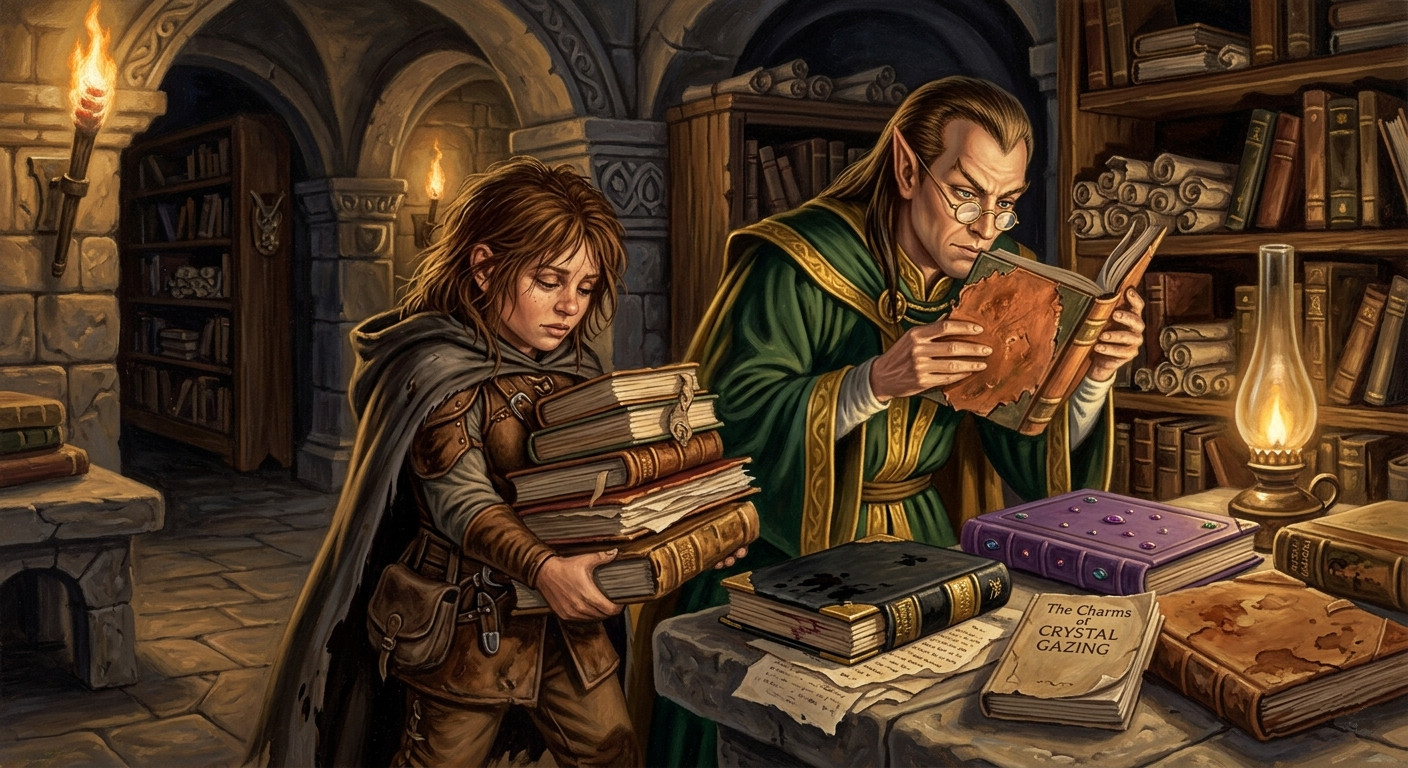
    After ten minutes of searching, the halfling thief returned from the library with a stack of eight books that teetered as she shuffled back to the party. The Elven wizard adjusted his spectacles and began taking one book at a time, examining them and reciting the titles.

    “This volume bound in black pigskin describes magical herbs, as I note by reading the gilded title on the spine. Oh, but the pages are all soiled by ink stains. Tanzil Jae was a prolific author in his day, but is quite obscure now.”

    “Now, this handsome volume in rare violet calfskin is a religious history of the inquisitors who cleansed the Piekaff Valley 300 hundred years ago. It’s part of a rather tedious series of 13 volumes each dealing with the exploits of various witch hunters. With so many pages torn out, I wouldn’t think it’s worth much, but these gems attached to the cover may be worth prying off, dear thief.”

    “It does not appear that this unusual book with the copper cover has faired well. Not surprising given its subject: conjuring demons. I can barely make out the words on these scorched pages!”

    “This old book with the paper cover is worthless. See how it crumbles as I turn the pages? Bah! It is only part of a larger collection on animal husbandry.”

    “I believe I will keep this small book with the paper cover. The Charms of Crystal Gazing by Malibart Churd. It’s well-worn, so I conclude it was either quite useful or quite inscrutable to its previous owner.”

    “Further Achievements of the Great Cathedral Builders by Stanisgurt Kloptikon This black cowhide is also quite worn. Art bores me.”

    “Here is another worn-out art book covered in yellow deerskin. It seems to instruct on sketching.”

    “Finally, we have another bejeweled cover, this time in red pigskin, all about realms inhabited by demons and devils. I’m not surprised this one is vandalized as well. See if you can dig those gems out of the cover, runt.”

    Original prompt from the Book Generator:

    This book’s cover is pigskin dyed black with gilded spine. The condition is poor, ink stains obscuring a fair amount of the pages. The subject is herbs with a focus on magical herbs, a single volume, written by a prolific but obscure author.

    This book’s cover is calfskin dyed purple and ebedded with gems. The condition is vandalized, missing many pages. The subject is religious history history, a single volume of a larger work with 13 volumes.

    This book’s cover is copper plates, green with verdigris. The condition is badly damaged, nearly illegible. The subject is conjurings within the field of demonology, a single volume, written by a prolific but obscure author.

    This book’s cover is heavy paper. The condition is ancient. Pages crumble as they turn. The subject is animal husbandry, a single volume of a larger work with 9 volumes.

    This book’s cover is heavy paper. The condition is worn and tattered. The subject is crystal gazing as a branch of divination, a collection of works all by the same author.

    This book’s cover is cowhide dyed black, the title branded into the cover. The condition is worn and tattered. The subject is cathedrals and chapels in the realm of art, the sequel to a book by the same author.

    This book’s cover is deerskin, stained yellow. The condition is worn and tattered. The subject is sketching in the realm of art, an edition of a regularly published book with multiple authors.

    This book’s cover is pigskin dyed red and ebedded with gems. The condition is vandalized, missing many pages. The subject is fiendish realms within the field of demonology, a single volume, written by a well-known author.

  • Alfred’s Shadowbane Stone

    Alfred’s Shadowbane Stone

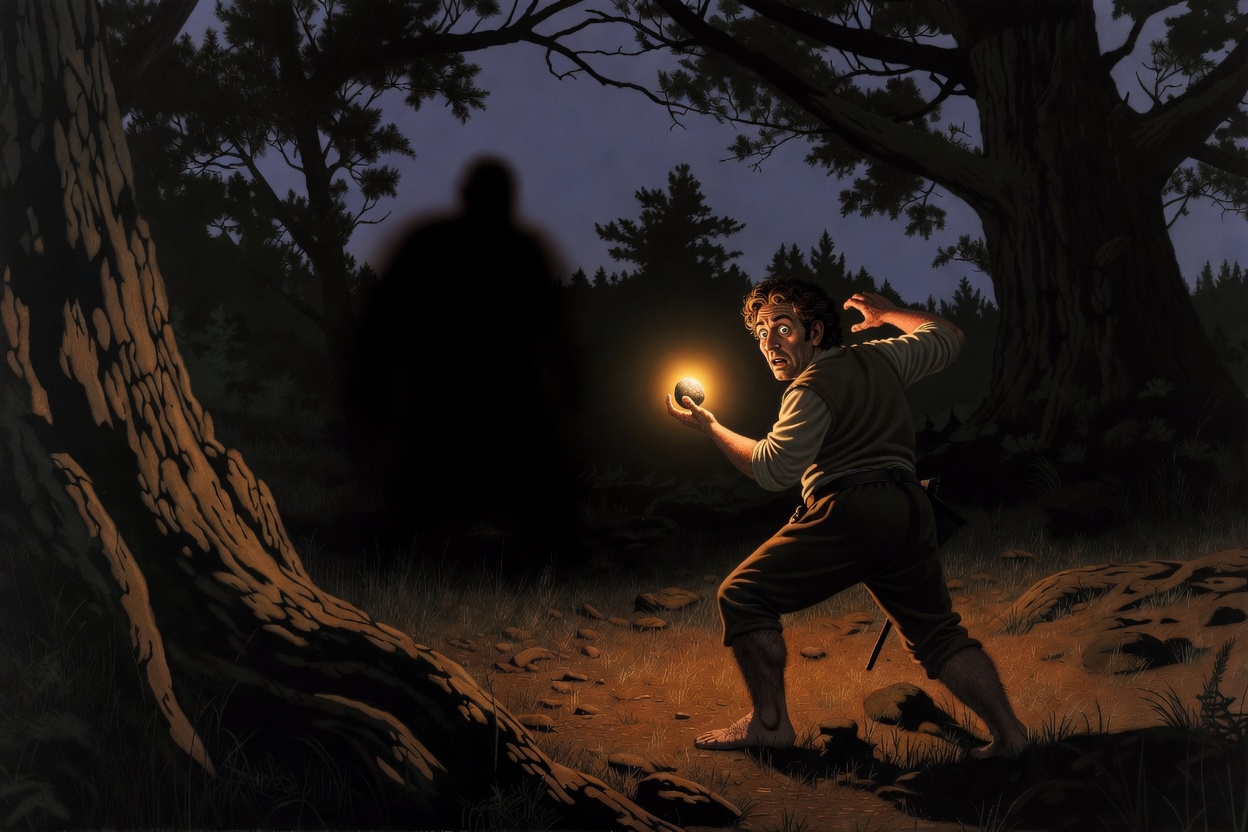
    This simple stone glows as bright as a candle when gripped in the hand. It functions as a magical weapon, able to harm all enchanted monsters for 1d4+1 points of damage when thrown. It adds +1 to attack bonus.

    The stone contains the soul of a celestial being who wagered with a devil over whether a mortal would choose wisely in the face of temptation. As payment for the loss, the devil condemned his opponent to a thousand years in the form of a stone discarded in a stream.

    Nearly a hundred years ago, a humble halfling named Alfred plucked a shiny stone from the creek near his home and was surprised to find it glowed as bright as a candle when held. He stuffed it in his pocket and sometimes brought it out as a curiosity, a minor magical device that helped him avoid tripping over tree roots while heading out to fish in the pre-dawn darkness.

    He never told anyone else that the stone whispered to him, encouraging him to keep his faith and to always treat others with honor. Surely the stone could not truly be alive with a real consciousness, he thought. In some particular moments of weakness, Alfred was sure the stone had forcibly turned away an intrusive thought to insult another or to take more than his share at the annual harvest celebration.

    One morning, he stepped past the old oak into a particular dark patch of shade, and he felt the bone-deep chill that comes from the touch of a Shadow, those terrible monsters who sap their victims’ strength. Reacting instinctively, he leaped backwards, pulled the stone from his pocket and hurled it at the nasty Shadow. No ordinary stone could harm such an enchanted creature, but the fortune favored that diminutive fisherman that morning. The magic of the stone dissipated the magical darkness of his foe. From that time, Alfred called his stone Shadowbane.

    Original prompt from the Enchanted Weapons generator:

    Stone +1
    Glows as a candle when held. Intelligent (11 INT 12 WIS 15 CHA).

    It was forged roughly a century ago and still appears new. A divine being made it to fulfill a divine wager. The item is utterly plain, its surface polished to a mirror sheen with no engraving or motif to betray the enchantement woven into its steel.

  • Aureate Circlet of Progenitors

    Aureate Circlet of Progenitors

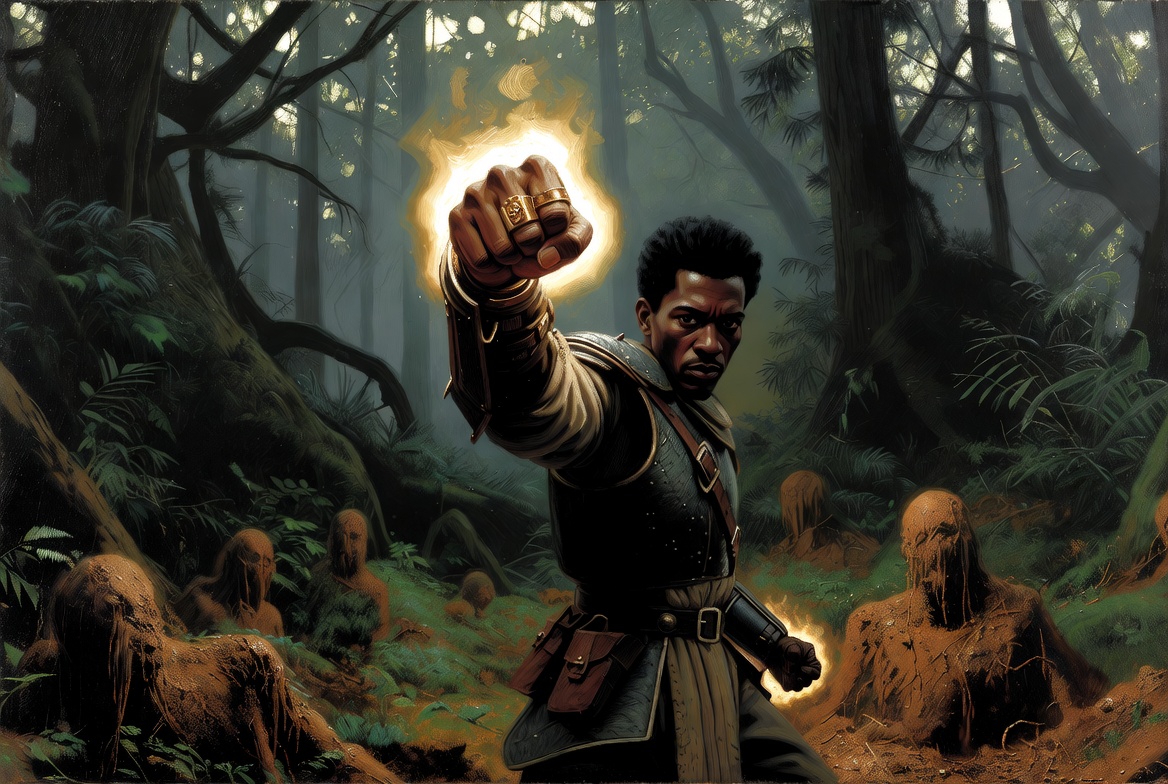
    This gold band allows the wearer to summon 1d12 beings that fight beside him as zombies for up to an hour. To activate the ring, the wearer must recite the oath engraved along its surface: “Dust and ashes, protect my flesh!”

    The figures are formed from nearby soil over 1d6 rounds, and the effect fails if there no suitable material within range. They behave as zombies created from an animate dead spell, including hit dice, attacks and movement. However, they are made from mud and resemble the ring wearer’s ancestors.

    Original prompt from the Ancient Rings generator:

    This gold ring, engraved with symbols, was created by spirits and given to mortals as reward for some great deed. The ring provides the following powers. Call 1d12 zombies once a week for 1 hour.

  • Brown Greeper

    Brown Greeper

    Armor Class: 14 (or wears armor)
    Hit Dice: 2
    No. of Attacks: 1 touch
    Damage: 3d10
    Movement: 60′
    No. Appearing: 6d4, Lair 8d12
    Save As: Fighter: 2
    Morale: 12
    Treasure Type: D
    XP: 100

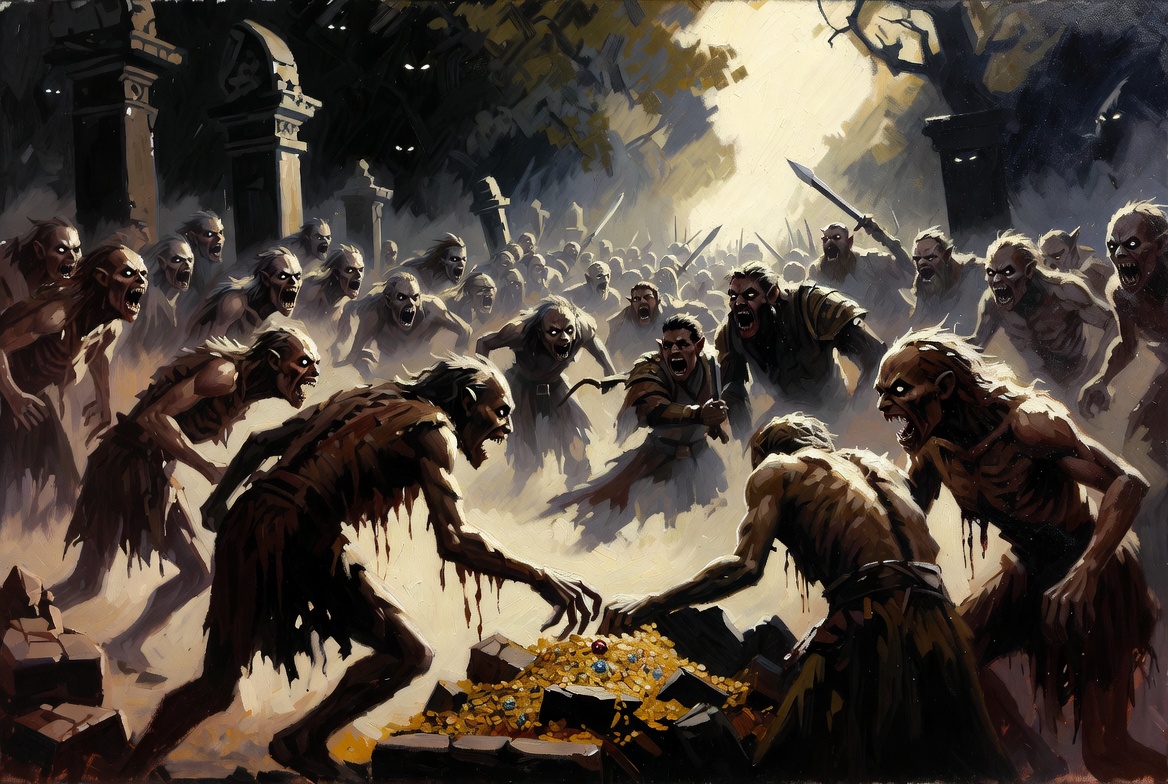
    Brown Greepers, otherwise known as Grak’s Progeny, are a peculiar type of undead invented by legendary necromancer Grak by chance when an animate dead spell went awry. The bodies of men, dwarves and elves are imbued with a malevolent force that compels them to reach out and deliver a damaging touch which ignores armor. Their wits are dim, but they are fleet of foot. A dozen of them may suddenly rush forward to mob unsuspecting adventurers uttering “greep! greep!”

    Any physical blow striking a Brown Greeper releases a blast of magical force in the form of an animate dead spell. Up to 4 HD of dead bodies rise as zombies and fight alongside their moronic masters. As such, they may be found with several zombies trailing along with them when encountered.

    Brown Greepers can be found in cemeteries from which they range and return, bringing zombified victims back with them. When encountered in such a locus, a hoard of treasure type D will be found in a loose pile.

    Here’s the random monster stats that come out of the generator.

    Armor Class = 14 (or wears armor)
    Hit Dice = 2 HD
    8 feet, 180 pounds
    Attacks = touch 3d10
    Movement = 60
    No. Appearing = 6d4, 8d12 in lair
    Save As = Fighter
    Morale = 12
    Treasure Type = D
    Animate dead if struck.
    Looks like a ordinary humanoid.  
    Semi-intelligent (5 INT)

  • The Sagacious Band of Enemy Revelation

    The Sagacious Band of Enemy Revelation

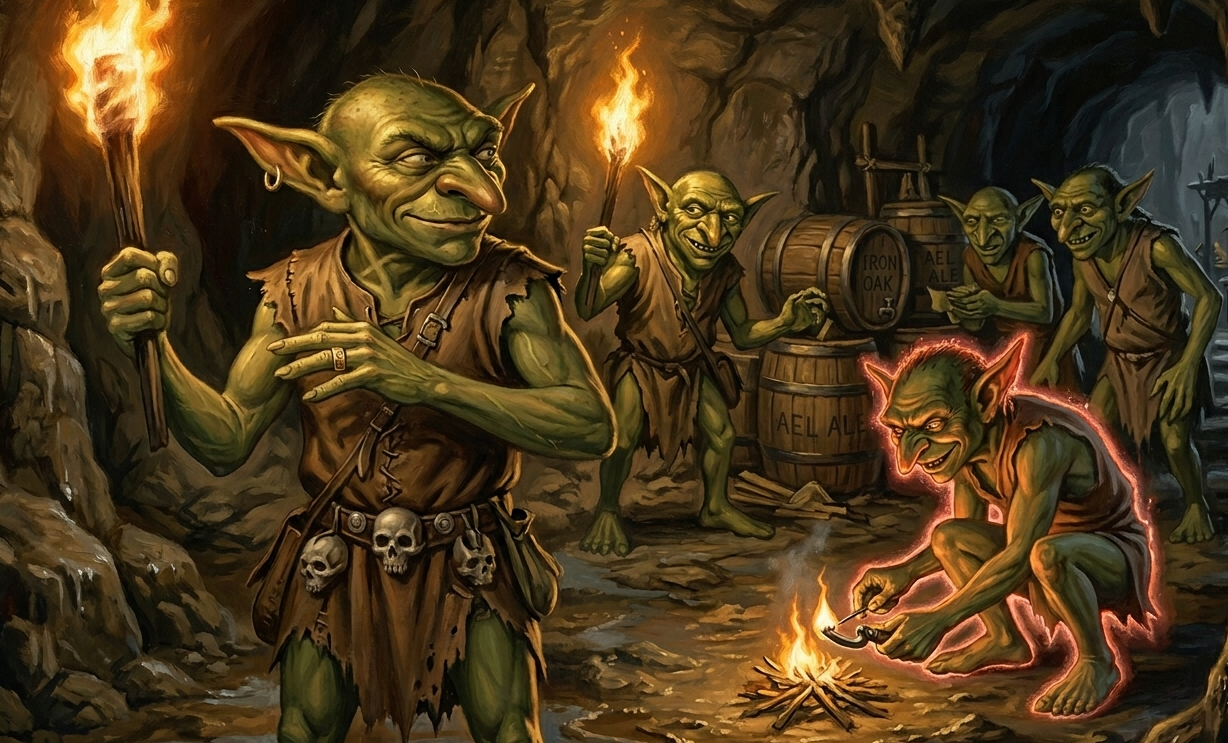
    Long ago, before Man rose up to rule the land, there were those among them that sought to make peace with the goblins. As a token of friendship, they made a brass ring engraved with the goblin symbol for “beware”. Into this ring they placed magic that allows the wearer to detect enemies once per day, such that for a duration of one hour, all those who mean the wearer harm appear outlined in a reddish glow.

    This ring was meant for goblins only, and only for them does it operate. Yet, those primordial men were but crude tinkerers in their craft, and the ring was made imperfect. It applies the delusion upon the wearer of being resistant to fire or heat. In defiance of all logic, the wearer will always conclude that any harm done by fire was half of what it ought to have been.

    This bronze ring, with engraved writing, was created by a primordial pre-human race as a pact to ensure peace. Its full powers only work for goblins. The ring produces the delusion that the wearer has fire resistance. The ring provides the following powers. Detect enemies once per day.

  • The Lingering Draught of Mnemonic Dissolution

    The Lingering Draught of Mnemonic Dissolution

    This potent poison must be poured into a victim’s beverage, making it more the subtle tool of the nefarious assassin rather than of an aggressive thief engaged in battle. Once consumed, the poor imbiber must save versus poison at a -2 penalty, else 1-4 hours later, he will find 1d6 of his memorized spells gone from his mind.

    With a little planning, that indulgent cleric at the inn might find himself lacking in prepared spells later that evening just at the moment when he’s confronted in a dark alley. Best to cast purifying spell over your drinks if you frequent the taverns near the wharf.

    Here’s the original output from the generator.

    This poison is delivered by ingesting. Its strength is considered strong -2 to save. Its effects are felt in 1d4 hours. The poison causes memory loss, save vs poison or lose 1d6 memorized spells. The effects are permanent and may not be reversed except by a wish.

  • Manticores in the Mud

    Manticores in the Mud

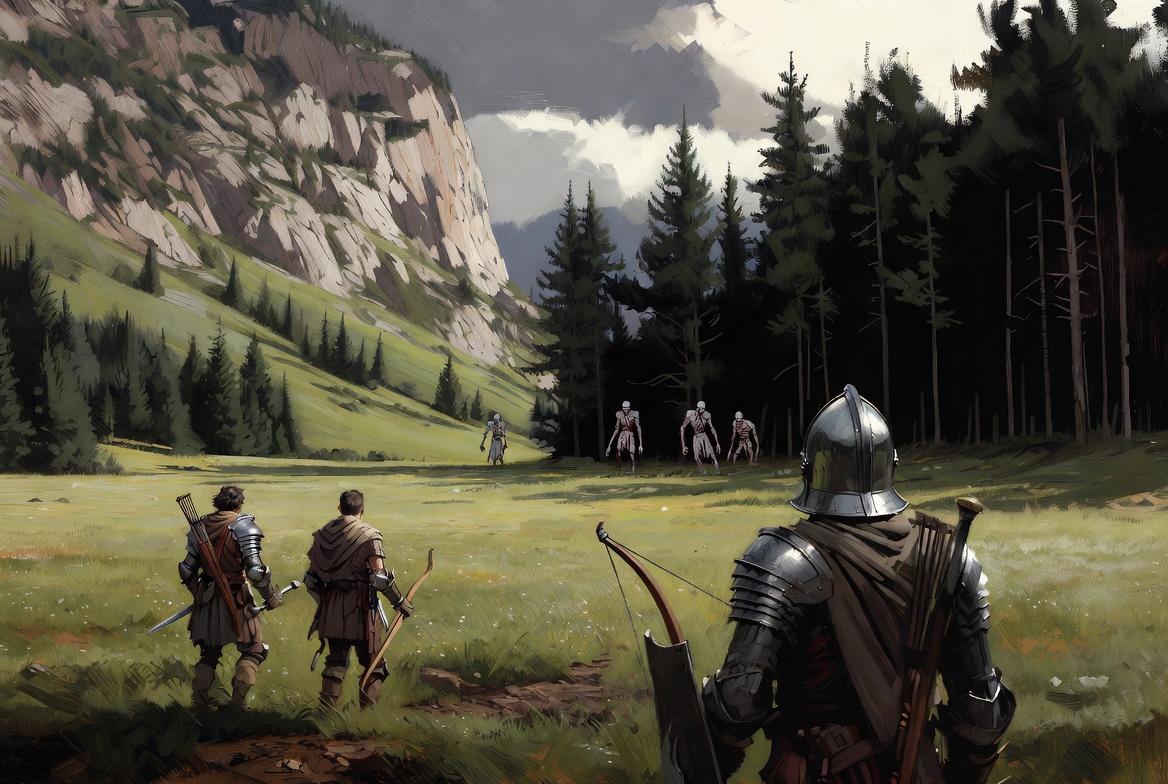
    While exploring the wetlands north of St. Orlan, the party comes upon a pair of manticores who have landed on an island of dry land among an expanse of deep muck. Just at this moment, the monsters have not noticed the party, giving them a chance to turn and slip away unnoticed. If they press forward, they will find the manticores wary, and ready for a fight. Yet, at only 30 yards away, the party might rush forward and get a few strikes in before the monsters can respond.

    The morning air is crisp and thick with the dew of Spring. The path being traveled narrows and ends here, leaving only a morass of deep mud that would easily rise to to meet the waist of a full grown man. Anyone foolish enough to enter that muck would need to save vs. death each round, adding their strength bonus, just to make any progress.

    2 Manticores AC 18, HD 6+1*, #At 2 claws/1 bite or 6 spikes (180′ range), Dam 1d4/1d4/2d4 or 1d6 per spike, Mv 40′ Fly 60′ (10′), Sv F6, Ml 9, XP 555

    HP 30☐☐☐☐☐ ☐☐☐☐☐ ☐☐☐☐☐ ☐☐☐☐☐
    ☐☐☐☐☐ ☐☐☐☐☐
    31☐☐☐☐☐ ☐☐☐☐☐ ☐☐☐☐☐ ☐☐☐☐☐
    ☐☐☐☐☐ ☐☐☐☐☐ ☐

    Manticores appear as overgrown lions with thick leathery wings and an ugly humanoid face. Their tails end in 24 spikes, of which they can fire six at a time. Out on the hunt and away from their lair, they carry no treasure, but would certain enjoy a breakfast of human flesh.

    I created this based on the following output from the St. Orlan swamp encounter generator.

    While exploring, the party encounters figures wandering 80 yards (30 if surprised) to the west.
    2 Manticores AC 18, HD 6+1*, #At 2 claws/1 bite or 6 spikes (180′ range), Dam 1d4/1d4/2d4 or 1d6 per spike, Mv 40′ Fly 60′ (10′), Sv F6, Ml 9, XP 555, Tr D

    Overgrown lion with thick leathery wings and an ugly humanoid face. Tail ends in 24 spikes.

    Their attitude is that there is clear and present danger. They are cautious and aware of possible trouble. They will disengage without violence if possible, or provide a final warning.

    Their surprise roll is 2, and the party rolls 5.

    The immediate area is grassy wetland with clear line of sight and easy movement. The area is a waist-deep bog, requiring save vs death +STR or be stuck for one round, and footing is sucking mud. No other natural annoyances are present..

    The general vibe is “crisp”.

  • Igruthar’s Ring of the World Tree

    Igruthar’s Ring of the World Tree

    This ring was forged by an Elven wizard of advanced age who sought to further the cause of his religion, the worship of the World Tree. He started with a cross section of a goblin’s arm bone, carefully carving it with runes an a oak motif. Into the ring, he poured a powerful enchantment that only one of Elf could use.

    At all times, the inset emerald glowed as bright as a candle, which was at times useful and other times inconvenient such that he took to wearing gloves. Whenever he wished, the glow would intensify to where it could burn skin or parchment, leaving a distinct symbol of the World Tree.

    It’s most amazing feature was the ability to summon a tree imp to serve the ring holder for up to 10 minutes.

    I worked up this ring based on the following output from the Ancient Rings generator.

    Bone Ring, highly reflective or shiny or glows, created by ancient wizard made for self made to battle for a alignment. Full powers only work for certain race Not cursed. Once a week can call a Imp to serve for a turn, Can burn signet design onto paper or brand skin

    Much of the logic behind this generator comes from a blog post on the Elfmaids and Octopi blog run by Chris Tamm. Chris is amazingly creative and inspiring, especially with the huge sets of tables for making up things like ancient rings.

    The current implementation of this generator doesn’t make the smoothest text, and it could actually grow in complexity. For example, “highly reflective or shiny or glows” really should become definitive based on a random choice.

  • Python in the Sinkhole

    Python in the Sinkhole

    Here’s an example of using the generator for encounters in the grasslands around St. Orlan. Most of this terrain type is far north of town, beyond the dread swamps, and it’s relatively dangerous. However, even a low level party can escape this encounter with a little luck and caution.

    The group finds themselves in an expanse of blooming wildflowers that grow waist-high. A halfling would find it especially easy to hide here, which I’d treat as +10% to hide roles or +2 to saving throws that would benefit from cover. Unfortunately, the thick cover is also hiding a sinkhole, inside of which is a giant rock python who is already in a bad mood.

    Whoever is leading the party will have to save versus death to avoid tumbling down into the sinkhole, taking 1d6 damage and then facing off with the python. The snake is going to attack immediately at the invasion of its space.

    The party is 60 yards away from the sinkhole, and they won’t be surprised by the snake when they see it. it could be inconvenient to get down into the pit to join the fight once it starts, though.

    Here’s the raw output of the genererator.

    While exploring, the party encounters figures wandering 60 yards (20 if surprised) to the northwest.
    1 Rock Pythons AC 14, HD 5, #At 1 bite/1 squeeze, Dam 1d4/2d4, Mv 30′, Sv F3, Ml 8, XP 405
    30′ long snake. Brown and yellow scales set in a spiral pattern. Its first attack is a bite. If the bite is successful, it coils around the victim and constricts in the same round. This squeezing does 2d4 points of damage per round, and occurs automatically until the snake dies or releases the victim.

    Their attitude is that there is clear and present danger. They are cautious and aware of possible trouble. They will disengage without violence if possible, or provide a final warning.

    Their surprise roll is 6, and the party rolls 4.

    The immediate area is covered by wildflowers, providing concealment for prone or small creatures (+2 bonus to stealth while moving slowly). The ground is a completely flat plain, and footing features a hidden sinkhole or depression requiring a save vs death to avoid falling 10′. Nothing much else distinguishes the area..

    The general vibe is “enrage”.

    The generator is setting up distance and surprise, but you must put those two rolls together. The snake has a reaction roll that’s just a bit towards the aggressive side, but given the vibe of “enrage”, I’m going with the snake flipping into fight mode rather than relying on more reaction rolls.

  • Sapphire Cursecoil

    Sapphire Cursecoil

    Here’s a monster that came out of the random monster generator.

    Armor Class: 19 (s)
    Hit Dice: 1+2
    No. of Attacks: 1
    Damage: 3d6 or disease (see below)
    Movement: 60′
    No. Appearing: 3d8, Lair 4d8
    Save As: Fighter: 2
    Morale: 12
    Treasure Type: F
    XP: 100

    These creatures resemble oversized blue snails, roughly 5 feet long and weighing about 166 pounds. They are highly intelligent (Intelligence 20), a cruel joke invented by a high level Magic User who fused aspects of lycanthropes and snails. As such, they can be harmed only by silver or magical weapons, and they spread their impressive numbers through a kind of magical disease or curse.

    A sapphire cursecoil attacks either by bludgeoning a foe with its head for 3d6 damage or by spraying forth a foul ichor (once per day). On a roll of 1-2 on 1d6, the victim contracts the curse that slowly transforms him into another cursecoil, progressively turning blue and folding into a snail-like shape until the change is complete. At any time before this end state, the victim may be restored with a remove curse spell. Afterwards, only a restoration spell can reverse it.

    Sapphire cursecoils are fearless and cunning, often found in groups that plan ambushes or use their curse to create more of their kind. They glide swiftly on their ventral feet, often swarming unsuspecting victims.


    Of course, I had to make some sense of the output, which was as follows.

    Armor Class = 19 (s)
    Hit Dice = 1 + 2 HD
    5 feet, 166 pounds
    Attacks = Disease or bludgeon 3d6
    Movement = 60
    No. Appearing = 3d8, 4d8 in lair
    Save As = Fighter
    Morale = 12
    Treasure Type = F
    Curse 1-2 on d6.
    Looks like a blue snail.  
    Highly intelligent (20 INT)

    A party of 4 adventurers of maybe 4th level should have a good time fighting off 15 or so of these guys. With low HD, they likely won’t land many hits, but woe to those victims that do get walloped. With 30 days to reverse the curse, it’s not too bad for PCs. The average 0-level villager has no chance.